It is dark by half four, the club nets are shut and the first match of the season feels a very long way off. You don't need a net to keep your batting sharp. The best batting drills at home are shadow batting, balance and footwork work, wall rebounds, drop-and-drive and partner throwdowns with a soft ball. Twenty minutes, three times a week, is enough to arrive in April with your technique intact.
Before You Start: Space, Safety and Kit
Most home batting practice goes wrong for boring reasons: a smashed light, a dented door, or a pulled muscle from going in cold. Sort these out first.
Check your space. You need enough room to take your backlift and follow through without hitting anything. Look up as well as around: ceilings, light fittings and open doors are the usual casualties. A garage, garden, hallway or cleared living room can all work.
Use a soft ball indoors. Stick to tennis balls, foam balls or wind balls. Don't hit a hard cricket ball in the house or against a wall, because it is dangerous and hard on a bat. A tennis ball on a damp, cold day also behaves more predictably than a hard ball.
Choose the right bat. A bat you don't mind scuffing is ideal. Hitting hard against brick or concrete wears the edges and toe, and cold winter air makes willow less forgiving. A thinner technique bat or a single stump is useful for some of the hand-eye drills below. Keep your best match bat for match conditions. Our guide to storing a cricket bat over winter covers how to look after it while it rests.
Supervise children. Younger players should always practise with an adult nearby, and anyone throwing balls at a batter should use soft balls and stay a sensible distance away.
Warm up. Do a few minutes of gentle movement before you start: arm circles, hip swings, bodyweight squats and some easy shadow shots. If something hurts, stop.
| What you have | What you can do |
| Just a bat (or no bat) | Shadow batting, balance finishes, footwork markers, visualisation |
| Bat and tennis ball | Drop-and-drive, wall rebound, top-hand control, ball-on-cone |
| Bat, ball and a wall | Wall rebound innings, single-stump drill |
| Bat, ball and a partner | Underarm throwdowns, leave-or-play, short ball, advance down the pitch |
| Mirror or phone | Technique checks for stance, head position and bat path |
How to Use These Drills
A drill only helps if you do it with focus. Aim for a few short sets of good-quality shots, not hundreds of lazy ones. Pick one technical thing to work on per session, such as keeping your head still or getting your front foot closer to the ball, and film yourself once a week. Phone video is one of the cheapest coaching tools you have.
A sensible routine is three sessions of about 20 minutes per week. Start with no-ball drills, add a ball, then add a partner and pressure. A four-week plan is included near the end.
Solo Drills With No Ball
These need almost no space and no equipment, so they work in a living room.
1. Mirror Shadow Batting
Stand side-on in front of a mirror or set your phone up to film. Play 10 shots of each type you want to improve (forward defence, straight drive, cover drive, back-foot defence and so on). Watch for four things: your head staying still and over the ball, your front foot moving towards the line, the bat coming down straight, and your weight finishing over the front leg.
Make it harder: pick a different shot each time as if reacting to a delivery, and call it out loud before you play it.
2. Balance Finish
Play a shot and hold your finish for three seconds. If you wobble, fall over or your head has drifted, your base was off. This one drill reveals more about your balance and weight transfer than almost any other.
3. Footwork Markers
Put three markers on the floor in an arc in front of you: one for a drive through off, one straight, one through leg. Cushions, paper plates or tea towels all work. Step to each marker and play the shot, finishing with your front foot beside or just past it, head over your front knee. Then add a back-foot marker and practise the step back and across.
4. Visualisation
Spend five minutes thinking through your first ten balls of an innings: where the field is, which balls you will leave, which you will attack. Close your eyes if it helps. It is not a replacement for physical practice, but it is free and can be done in bed.
Solo Drills With a Ball
5. Drop-and-Drive
Hold a tennis ball in your lead hand and drop it in front of you, so it bounces and rises. Play the shot after the first or second bounce. Vary where you drop it: full, a touch wide, slightly closer to your pads. Work on watching the ball all the way onto the bat, and keep your head still through the shot.
6. Top-Hand Control
Hold the bat with only your top hand and play controlled drives. This teaches the top hand to lead the shot and keeps you from overusing the bottom hand. Keep it slow and smooth. Then switch to normal grip and compare how it feels.
7. Wall Rebound Innings
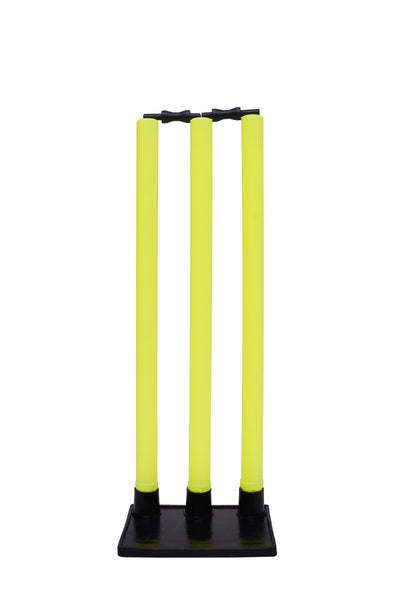
Find a flat wall (a garage wall or garden wall works well) and stand about three metres away. Chalk or tape three stumps on the wall and a target for each scoring zone. Throw a tennis ball against the wall so it comes back at you, and play the rebound. Varying the height and angle of the throw gives you different "deliveries".
Make it a game: score runs for hitting a zone, lose a wicket if the ball hits the stumps, and play a 10-over innings.
8. Ball-on-Cone
Rest a tennis ball on a cone or tee and hit it away along the ground. Because the ball is still, you can concentrate completely on your head position, bat path and finish. Place the ball in different spots to work on your scoring areas.
9. Hanging Ball
Suspend a soft ball in a sock or stocking from a secure anchor point at roughly waist height and hit it as it swings. This sharpens timing and hand-eye coordination. Only use a soft ball, make sure the anchor point is secure, and keep other people well clear of the swing.
10. Single-Stump or Thin-Bat Drill
Hitting a tennis ball with a single stump or a technique bat is a classic hand-eye exercise. It is often associated with the young Don Bradman, who is said to have hit a golf ball against a water tank with a stump. Don't try that with a golf ball indoors. Use a tennis ball, go slowly, and switch back to a full-size bat afterwards. Everything feels wider.
Drills With a Partner
You don't need a good bowler to be a good feeder. Underarm tennis-ball feeds from five or six metres are plenty.
11. Underarm Throwdowns
Your partner stands about five metres away and throws underarm. Start with straight, full balls for front-foot shots. Then ask for short ones for back-foot play. Finish with a mixed set, so you cannot predict what is coming.
12. Leave or Play
Mark a "corridor" with two cones or a chalk line around off stump. Your partner throws a mix of balls. If it is outside the corridor, leave it; if it is in the corridor, play it. This builds the most underrated batting skill: knowing what not to hit.
13. Short Ball: Duck, Sway or Play
Your partner kneels, throws slowly underarm at chest height, and you decide whether to sway, duck or play. Use soft balls only, start slowly, and stop if anyone is uncomfortable. The aim is to get used to watching the ball and moving your head out of the line.
14. Advance Down the Pitch
Your partner drops the ball from arm's length, then steps away. You move forward quickly and play the shot after the bounce, head level, eyes on the ball. It is a good way to get used to attacking spin and moving your feet decisively.
What Can You Do in a Small Space?
| Space | Best drills |
| Living room or bedroom | Mirror shadow batting, balance finish, footwork markers, visualisation (no ball) |
| Hallway or stairs | Footwork markers and shadow batting only. No hitting |
| Garage | Wall rebound, drop-and-drive, ball-on-cone, hanging ball (with care) |
| Garden or driveway | All ball drills, plus partner drills |
| Park or open space | Partner throwdowns, advance down the pitch, short ball drills |
Strength and Mobility for Batters
Cricket batting is a rotational, one-sided movement, so general fitness helps. Simple bodyweight work such as squats, lunges, planks, side planks and press-ups builds a base. Add gentle hip and shoulder mobility work, and some grip and forearm exercises if you wish. This guide isn't medical advice. If you have an injury or health condition, speak to a coach, physio or doctor before starting a programme.
A Simple Four-Week Winter Plan
Three 20-minute sessions per week. Warm up first.
| Week | Focus | Sessions |
| 1 | Technique, no ball | Mirror shadow batting, balance finish, footwork markers |
| 2 | Add the ball | Drop-and-drive, top-hand control, ball-on-cone |
| 3 | Timing and judgement | Wall rebound innings, leave-or-play, underarm throwdowns |
| 4 | Pressure and variety | Scored wall innings, short ball, advance down the pitch, a final video check |
By week four, film a short clip of your drive and compare it with week one. If your head and balance have improved, the plan is working.
Common Mistakes
- Practising too fast. Slow, controlled reps build better habits than rushed ones.
- No clear focus. Pick one thing per session.
- Using a hard ball in a tight space. It isn't worth the risk.
- Skipping the warm-up.
- Only hitting what you are good at. Include the shots and deliveries you avoid.
- Never filming yourself. Your own eyes will tell you things a mirror won't.
Look After Your Bat While You Train
If you use your bat for home drills, wipe it dry afterwards and store it somewhere steady and indoors. A padded, breathable bat cover protects it from knocks between sessions, and our cricket bat protection page explains how to choose one. If your current bat is worn or damaged, you can browse the Fore Sports cricket bat range ready for next season.
Conclusion
Winter is when plenty of batters stand still. A few focused drills a week, with a soft ball, a patch of floor and your phone for video, will keep your technique, balance and timing ticking over until the nets reopen. Start with shadow batting tonight, add a ball next week, and arrive in April ready to play.