

Wicket-Keeping Pads vs Batting Pads: 7 Key Differences You Need to Know
Jul 13 , 2026
No - wicket-keeping pads and batting pads are not the same, and they are not designed to be swapped. Batting pads prioritise broad, direct-impact protection for a player facing deliveries at the crease. Keeping pads prioritise lower weight and freedom of movement for a player who crouches, rises and moves sideways all day. Both are leg guards. They are built for different jobs.
Quick comparison
|
Feature |
Batting pads |
Wicket-keeping pads |
|
Main purpose |
Protection against a hard ball struck directly at the leg |
Protection while crouching, rising and moving laterally behind the stumps |
|
Height |
Typically taller, extending further up the thigh |
Typically a lower profile, finishing lower on the leg |
|
Coverage |
Broader across the front and sides |
More contained, concentrated where a keeper takes impact |
|
Padding |
Heavier reinforcement, more layers, often high-density foam and cane depending on the model |
Protective, but balanced against mobility and bulk |
|
Weight |
Generally heavier |
Generally lighter (exact weights vary considerably by model - check the manufacturer's spec) |
|
Knee area |
More substantial knee roll and upper-pad structure |
Designed to flex into a deep crouch without bunching |
|
Side wings |
Usually broader, protecting the outside of the leg at the crease |
Usually slimmer, to avoid catching during lateral movement |
|
Straps |
Typically secure the pad for standing, running and stretching |
Typically secure the pad through repeated crouching and diving |
|
Movement |
Footwork, running between the wickets |
Deep crouch, repeated rise, sideways movement, diving |
|
Best suited to |
Batters facing hard-ball deliveries |
Wicket-keepers standing up or standing back |
|
Use for the other role? |
Possible, but restrictive for regular keeping |
Not advisable for hard-ball batting |
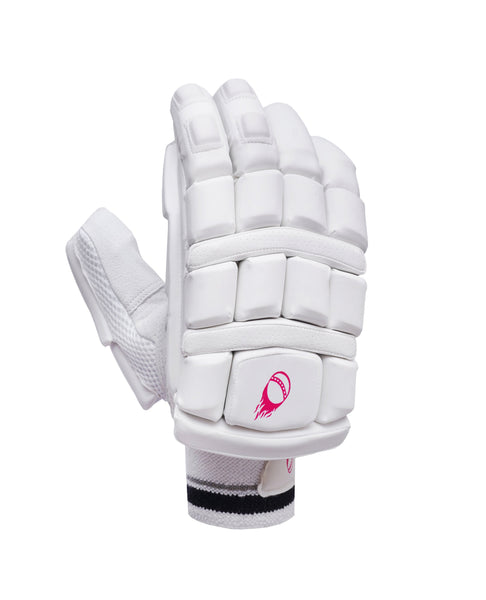
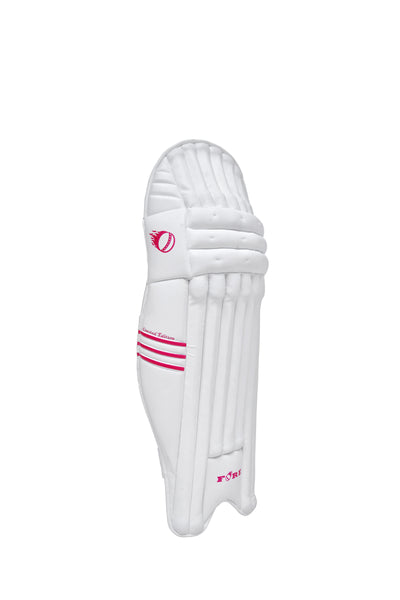
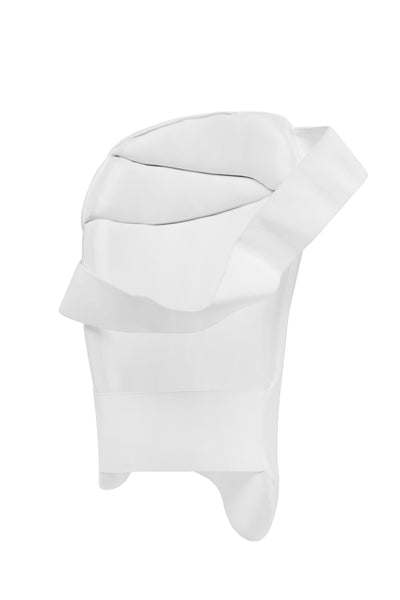
Are wicket-keeping pads the same as batting pads?
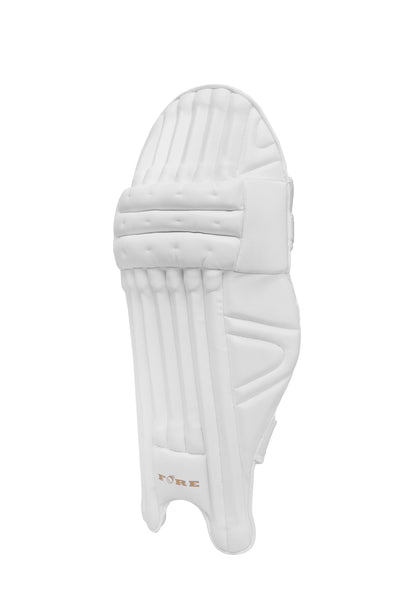
No. They are both external leg guards, and to a non-cricketer they look similar - but their construction reflects two very different jobs.
A batter stands at the crease and may take a direct impact from a hard ball travelling at speed. The pad's priority is to absorb that impact across as much of the leg as it can. Extra height, extra bulk and extra reinforcement are all worth having, because the batter is not asked to crouch in them for two hours.
A wicket-keeper spends the innings crouching, rising, shuffling sideways and occasionally diving. They still take impacts - a ball through the gloves, an edge, a deflection - but the pad's priority is to allow all that movement without fighting the leg. Weight and bulk are the enemy.
Everything else that follows is a consequence of those two sentences.
The 7 key differences
1. Purpose and playing role
What changes: everything downstream. This is the difference that causes the other six.
Batting pads are designed around a single, high-stakes moment: a hard ball arriving at the leg. The design question the manufacturer is answering is how much impact can this absorb, across how much of the leg?
Keeping pads are designed around a repeated movement pattern: down into the crouch, up as the ball arrives, sideways to a wide one, down again. The design question is how do we protect this player without slowing them down or wearing them out?
What a buyer should check: the product's stated intended use. Not the appearance - the label. Manufacturers state which role a pad is built for, and that is the answer.
2. Height and leg coverage
What changes: batting pads generally extend further up the leg. Keeping pads typically use a lower-profile design that finishes lower.
Why: a taller pad protects more thigh, which matters to a batter facing quick bowling. But height is exactly what fights a keeper. A pad that extends well up the thigh has to fold or bunch when the keeper drops into a full crouch - it pushes against the thigh, restricts the hip and makes the crouch harder to hold. Keeping pads are cut lower so the leg can close properly.
How it affects the player: a keeper in tall pads feels the pad working against them on every single delivery. A batter in short pads has less of the leg covered when a ball arrives.
What to check: put them on and get into the position you will actually play in. For a keeper, that means a full crouch - not standing in the shop.
3. Padding and protection level
What changes: the amount, density and distribution of protective material across the face, knee, sides and instep.
Batting pads usually carry more of it. Depending on the model, that can mean multiple layers of high-density foam, cane rods for structural rigidity, a more substantial knee roll and reinforced bolsters. The face of the pad - the part that meets the ball - is built to spread and absorb a direct impact.
Keeping pads are not unprotected, and it is a mistake to describe them that way. They protect the areas a keeper actually gets hit: the front of the shin, the knee, the instep. What they generally do without is the additional bulk and reinforcement that a batter needs and a keeper would only carry as dead weight.
What to check: where the protection sits, not just how much there is. And check the model - construction varies significantly between brands and price points, and a premium keeping pad may well be better protected than an entry-level batting pad.
4. Weight
What changes: keeping pads are typically lighter. How much lighter depends entirely on the models being compared.
Why it matters more than it sounds: a keeper lifts their own legs, and whatever is strapped to them, on every delivery of the innings. Fifty overs is three hundred crouches and three hundred rises. Weight that a batter would never notice becomes cumulative fatigue for a keeper - and a tired keeper is a keeper who is slow to a low edge in the 45th over.
Batting pads can afford the weight because a batter's leg movement is less repetitive and less continuous.
5. Shape, knee roll and side wings
What changes: the visible structure - and this is where you can usually tell the two apart on sight.
- Knee roll. Batting pads typically have a more pronounced, more structured knee roll. Keeping pads are shaped to flex at the knee rather than sit rigidly over it, because that joint is closing and opening constantly.
- Top hat. The section above the knee is usually more substantial on a batting pad and slimmer, or lower, on a keeping pad.
- Side wings. Batting pads generally have broader wings protecting the outside of the leg. Keeping pads tend to have slimmer wings that are less likely to catch as the keeper moves sideways or goes to ground.
- Curvature and flex points. Keeping pads are usually shaped with more curve to wrap the leg and flex where the leg bends.
The caveat that matters: these are common patterns, not rules. Manufacturers make different design decisions, and some models blur the lines. If you are not certain, the product listing will tell you.
6. Straps and fit
What changes: how the pad is held on, and how it stays put during the movement the role demands.
A batting pad must stay secure while the batter stands, plays forward and back, and sprints between the wickets. A keeping pad must stay secure through a repeated deep crouch and lateral movement - a pad that slides down or rotates during a dive is worse than useless.
Do not use strap count to identify the pad type. It is a common shortcut and it is unreliable: the number and style of fastenings varies by manufacturer, by model and by price point, in both categories. Some keeping pads have three straps; so do plenty of batting pads.
What matters more than the count is that the pad sits with the knee roll aligned to your actual knee, does not rotate when you move, and does not need over-tightening to stay in place.
Fit is a subject in its own right, and measuring properly matters more than most people think. For measuring instructions and charts, see our wicket-keeping pads size guide.
7. Mobility and comfort in the role
What changes: how the pad feels once you are actually playing.
Batting movements: setting up at the crease, footwork forward and back, stretching to reach the ball, running between the wickets. Largely front-and-back, in bursts, with the leg mostly extended.
Keeping movements: dropping into a crouch, rising as the ball is delivered, moving sideways, standing up to the stumps or back to the quicks, diving and getting up again. Continuous, repetitive, and with the knee deeply flexed for much of it.
Wear the wrong type and you feel it immediately. In batting pads, a keeper finds the crouch harder to hold and the pads bunching at the thigh. In keeping pads, a batter has less of the leg guarded in the areas a hard ball is most likely to find.
Can you use batting pads for wicket-keeping?
There are three separate answers here, and running them together is where most advice goes wrong.
What the Laws permit. The Laws of Cricket allow the wicket-keeper to wear external leg guards - the keeper is the only fielder who may. The Laws do not specify a design, a size or a commercial category of pad. There is no law requiring a keeper to wear purpose-made keeping pads. Always check your league or competition's playing conditions as well, which can add their own requirements.
What is practical. Yes, you can physically keep wicket in batting pads, and plenty of people have. But the extra height and bulk push against the thigh in the crouch, the knee roll can sit awkwardly as the knee closes, and the additional weight adds up over a long innings. You will feel restricted, and you will get tired sooner.
What is recommended for regular keeping. Purpose-made keeping pads, without much hesitation. If you are keeping every week, the mobility difference is not a marginal preference - it is the difference between comfortable keeping and fighting your own equipment.
The honest exception: if you are keeping for two overs because the regular keeper is injured, or a junior is trying the role for the first time to see if they like it, batting pads will get you through. That is a sensible use of equipment you already own. It is not a long-term answer, and it should not be sold to you as one.
Can you bat in wicket-keeping pads?
Generally, no - not for hard-ball cricket.
Keeping pads are typically built with less height, less bulk and less reinforcement in exactly the areas a batter is most likely to be struck. A ball that a batting pad would absorb comfortably may find less protection, or none, in a keeping pad.
The nuance: keeping pads are not all the same, and a well-made one is not flimsy. But they are not designed for a direct hit from a hard ball at pace, and that is the specific thing a batting pad exists to handle.
If you are batting with a hard ball, wear pads made for batting. Check the manufacturer's stated intended use if you are unsure - it will say.
Which pads should an all-rounder or wicket-keeper-batter buy?
If you do both roles regularly, you need both pairs. There is no clever compromise product that does both jobs properly, because the design requirements genuinely conflict.
That said, here is realistic advice depending on where you sit:
- Regular wicket-keeper who also bats: two pairs. This is not optional if you are keeping every week - it is the core of your kit.
- Batter who keeps occasionally: buy good batting pads first. Keeping pads become the priority the moment "occasionally" turns into "most weeks".
- Junior club player: batting pads first, in almost every case - juniors bat more often than they keep. Add keeping pads when the role becomes regular. Size both properly, and see the note below about growing room.
- Adult league player: two pairs, matched to how often you actually perform each role. Be honest about the split.
- Schools and clubs sharing kit: hold a range of both types in the sizes your players actually are, and keep them clearly separated and labelled. Mixed-up pad boxes are how juniors end up keeping in adult batting pads.
- On a tight budget: buy for the role you do most, and do it properly. A well-fitting pair for your main role beats two ill-fitting compromise pairs. If you occasionally do the other role, use what you have and prioritise the correct pads as your next purchase. Everyone builds a kit bag over time - that is normal, and nobody should make you feel otherwise.
How to identify each type at a glance
Batting pads commonly have:
- Taller overall coverage, extending further up the thigh
- A more substantial front face
- A more developed knee roll and upper-pad structure
- Broader protective side wings
- A build clearly intended for a direct impact at the crease
Wicket-keeping pads commonly have:
- A shorter, lower profile
- A visibly lighter, slimmer build
- A shape that folds cleanly into a crouch
- Less bulk around and above the knee
- Slimmer wings and more obvious flex
The important caveat: these are common patterns, not guarantees. Designs vary between manufacturers, and some models are less obvious than others.
The reliable method: check the label, the product listing or the manufacturer's website. Pads are sold by role, and the intended use is stated. Do not rely on appearance alone - and definitely do not rely on strap count.
How to choose the correct pads
- Match the pad to the role you actually play - not the one you hope to play.
- Confirm it is designed for hard-ball cricket if that is what you play. Softball and training pads are not the same thing.
- Measure properly, using the manufacturer's stated method and measuring points.
- Check knee alignment. The knee roll should sit on your knee - not above or below it.
- Test the movements of your role. Keepers: get into a full crouch and hold it. Batters: play forward and back.
- Check the straps and stability. The pad should not rotate or slide when you move.
- Check materials and intended playing level against how and where you play.
- Use the manufacturer's size chart, not a generic one.
- Do not buy oversized junior pads to "grow into". An oversized pad sits wrong, moves in play, and protects the wrong parts of the leg. It is a false economy.
- Replace pads that are visibly damaged or no longer fit. Compressed, split or loose protection is not doing its job.
Browse wicket-keeping equipment or cricket batting pads at Fore Sports, and see our wicket-keeping pads size guide before you order.
Frequently asked questions
Q. What is the main difference between keeping and batting pads?
Purpose. Batting pads are built to absorb a direct impact from a hard ball, so they are taller, bulkier and more heavily reinforced. Keeping pads are built for a player who crouches, rises and moves sideways continuously, so they are lower, lighter and more flexible. Every other difference follows from that.
Q. Are keeping pads the same as batting pads?
No. Both are external leg guards and they look broadly similar, but they are constructed differently and sold as separate products. Using one in place of the other means accepting either restricted movement or reduced protection, depending on which way round you do it.
Q. Can a wicket-keeper wear batting pads?
The Laws of Cricket permit the keeper to wear external leg guards and do not prescribe a design, so it is not prohibited. In practice, batting pads restrict the crouch and add weight over a long innings. For occasional or emergency keeping they will do. For regular keeping, purpose-made pads are clearly the better choice.
Q. Can you bat while wearing wicket-keeping pads?
Not advisable for hard-ball cricket. Keeping pads typically have less height and less reinforcement in the areas a batter is most likely to be struck. Check the manufacturer's stated intended use - pads are designed and sold for a specific role, and batting is the one that involves facing the ball directly.
Q. Why are wicket-keeping pads smaller?
Because size fights the crouch. A tall pad has to bunch and fold when the keeper drops into position, pushing against the thigh and restricting the hip. A lower profile lets the leg close properly. Smaller also means lighter, which matters across the hundreds of crouches in an innings.
Conclusion
Batting pads exist to absorb a hard ball hit directly at your leg. Keeping pads exist to protect a player who is crouching, rising and moving sideways for hours. Both are leg guards, both are protective, and they are not substitutes for one another.
If you do one role regularly, buy pads made for that role. If you do both regularly, own both. And whichever you buy, fit matters as much as type - a correctly sized pad in the right category will always beat an expensive one that sits wrong on the leg.
When you are ready, have a look at our wicket-keeping equipment and cricket batting pads.


