

How to Choose the Right Size Cricket Helmet
Jul 16 , 2026
To choose the right size cricket helmet, measure around the widest part of your head with a soft tape measure, just above the eyebrows, and compare the reading against the manufacturer's size chart for that specific model. Then check the fit in person if you can: the helmet should feel secure, without painful pressure points, and it shouldn't move when you shake your head.
Why Choosing the Right Size Cricket Helmet Matters
A cricket helmet only does its job if it stays correctly positioned during play. One that's too loose can shift on impact or during quick head movements, exposing areas it's meant to cover. One that's too tight causes discomfort that distracts from batting, and can leave marks or headaches during longer sessions. Getting the size right the first time also means you're not relying on the helmet moving back into place after it's already shifted - by then, a false sense of security is doing more harm than an obviously ill-fitting helmet would.
How to Measure Your Head for a Cricket Helmet
- Use a soft, flexible tape measure - the kind used for dressmaking, not a rigid DIY tape. If you don't have one, a piece of string works: wrap it around your head, mark where it overlaps, then measure the string against a ruler.
- Position the tape just above the eyebrows, roughly one to two finger-widths up, at the front.
- Pass it around the widest part of the back of the head. This is usually slightly above the ears, not at the base of the skull.
- Keep the tape level all the way round - it should form a straight horizontal line, not sit higher at the back than the front.
- Read the measurement in centimetres.
- Repeat the measurement three times. Head measurements vary slightly depending on tape tension and positioning, so take the largest of the three readings as your working measurement.
- Record the number before you start comparing it to size charts - it's easy to forget or second-guess once you're browsing products.
For a growing child, remeasure each season rather than assuming last year's size still applies.
General Cricket Helmet Size Guide
The table below is a general starting point, based on typical UK retailer sizing. It is not a substitute for the specific size chart published for the exact helmet model you're buying - cricket helmet sizing varies between brands and even between ranges from the same brand, so always check the product page before ordering.
| Size category | Head circumference | Typical player |
| Junior S | 52–54 cm | Ages 7–10 |
| Junior M | 54–57 cm | Ages 10–13 |
| Youth / Small Adult | 56–58 cm | Ages 13–15, or smaller adult heads |
| Adult M | 58–60 cm | Adult |
| Adult L | 60–62 cm | Adult |
Different sources publish slightly different ranges for the same size labels - some general guides put "small" as high as 55–58 cm, for example. That inconsistency is exactly why the specific manufacturer's chart for your chosen model matters more than any general table, including this one.
What to Do If You Are Between Two Sizes
If your measurement falls close to the boundary between two sizes, don't default automatically to sizing up. The right decision depends on:
- The adjustment system. Many helmets have an internal ratchet or adjustable padding that can take up a small amount of slack - check whether the model you're considering has this before deciding.
- The padding thickness. A helmet with thicker internal padding may fit a borderline measurement more snugly at the smaller size than one with minimal padding.
- Head shape, not just circumference. Two people with the same measurement can have different head shapes, which affects how a given shell fits.
If you can try the helmet on, or order from a retailer with a straightforward returns policy, that's more reliable than guessing between two sizes from measurement alone.
How Should a Cricket Helmet Fit?
Work through this checklist once the helmet is on:
- Firm, even contact around the head, without one side feeling tighter than the other.
- No painful pressure points, particularly at the temples or forehead.
- Minimal movement when you turn your head or shake it gently - the helmet shouldn't shift independently of your head.
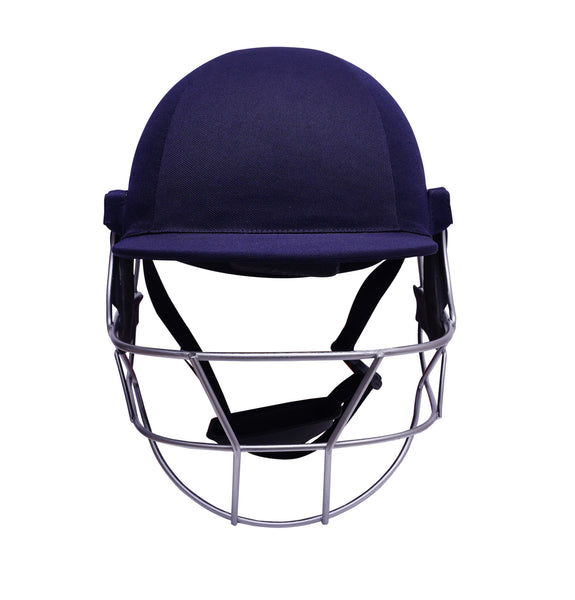
- Correct forehead coverage - the front edge should sit roughly one finger-width above the eyebrows, not high on the crown.
- A clear eye line, with nothing from the shell or peak obstructing your view of the ball.
- Correct grille position - the grille should sit at a distance and angle that protects the face without blocking your sightline. Check the specific product's fitting instructions, since guidance on exact grille height varies slightly by design.
- A secure chin strap, fastened so that roughly one finger fits between the strap and your chin - snug, not restrictive.
- Comfortable breathing and speaking - you shouldn't feel the chin strap or shell restricting your jaw movement.
- A stable fit while looking up and down, not just side to side, since batting involves constant head movement tracking the ball.
Signs Your Cricket Helmet Is Too Small
- Visible red marks or indentations on the forehead or temples after wearing it briefly.
- Headaches or noticeable discomfort within a short period of wear.
- The chin strap needs to be loosened significantly to make the shell tolerable, which then compromises how securely it's held on.
- The helmet doesn't fully lower into the correct position, sitting higher on the head than it should.
Signs Your Cricket Helmet Is Too Large
- The helmet shifts or rotates when you shake your head or run.
- You can fit more than one or two fingers between the chin strap and your chin, even fully tightened.
- The front edge sits too low, affecting your eye line, or too high, exposing the forehead.
- The internal padding compresses fully without achieving a snug fit, leaving a gap between padding and head.
Junior vs Adult Cricket Helmet Sizes
Choose helmet size based on head circumference, not age. Age-based size guides are only a starting estimate - head size varies significantly between children of the same age, and using age alone risks a poor fit either way.
For parents buying a child's first helmet: don't buy a size larger for them to "grow into." A loose-fitting helmet is a safety issue, not just a comfort one - it can move out of position during play, which defeats the purpose of wearing it. Plan to remeasure and potentially replace the helmet as the child grows, rather than buying ahead of current size.
It's also worth noting that junior shells are built specifically for smaller heads and don't offer the same coverage area if worn by someone who has outgrown them - a young player whose measurement has moved into adult range should be sized into an adult shell, not kept in a junior one by default.
Do Cricket Helmet Sizes Vary Between Brands?
Yes. Cricket helmet brands can use different size labels, shell shapes, padding systems and adjustment mechanisms, so the same head measurement won't necessarily correspond to the same size label across every brand. This is a genuine limitation of any general size chart, including the one above - it's a starting point for narrowing down your range, not a substitute for the specific product's own chart.
If you want a fuller comparison of what individual UK cricket helmet brands offer - safety features, weight, and typical price range - see our guide to cricket helmet brands available in the UK. In short: every certified helmet, regardless of brand, must meet the same BS 7928:2013 standard - brand differences are mostly about weight, padding, and finish rather than the underlying safety requirement.
What Else Should You Consider When Choosing a Cricket Helmet?
Beyond size, check the following before buying:
- Verified safety certification. Look for a BS 7928:2013 label on the shell - this is the current British Standard, adopted by the ICC internationally, and is what the ECB's safety guidance is built around.
- Grille material. Steel is the standard, affordable option. Titanium grilles typically cost more and reduce weight, but material choice is about comfort and weight, not a difference in certified protection level.
- Weight and padding, particularly if you bat for extended periods.
- Ventilation, for comfort in hot conditions.
- Adjustability, especially for juniors likely to need fine-tuning across a season.
- Visibility through the grille and peak.
- Neck-protector compatibility. Following an update to ECB safety guidance in late 2025, neck protectors are now strongly advised at all times a helmet is required or recommended - not just at professional level - so it's worth checking whether your chosen helmet accepts one.
- Junior or adult shell, matched to current head measurement.
- Intended level of cricket, since higher-impact league or representative cricket may justify spending more on comfort and weight features, while club or training use is generally well served by an entry-level certified helmet.
- Budget.
Certification tells you a helmet meets the required safety threshold; the features above affect comfort, weight and how long a player will happily keep the helmet on - they're a separate consideration, not a way to compensate for poor sizing.
Cricket Helmet Buying Checklist
- Measure head circumference three times, using the largest reading.
- Compare against the specific product's own size chart, not a general guide.
- Confirm BS 7928:2013 certification is stated on the product page.
- Check whether the model accepts a neck protector, if that's relevant to your level of cricket.
- If between sizes, check the adjustment system and padding before deciding.
- Try the helmet on if possible, or check the retailer's returns policy before ordering online.
- Once it arrives, run through the fit checklist above before first use.
Find the Right Cricket Helmet at Fore Sports
Once you know your measurement, Fore Sports' cricket helmet collection lists current sizing, prices and colours for adult and junior helmets, all certified to BS 7928:2013. Compare your measurement against the size chart on the collection page, and get in touch if you're unsure between two sizes before ordering.
Frequently Asked Questions
Q. How do I know what size cricket helmet I need?
Measure your head circumference with a soft tape, just above the eyebrows and around the widest point at the back of the head, taking the largest of three readings. Compare that measurement against the specific helmet model's own size chart.
Q. How tight should a cricket helmet be?
Snug and secure, without painful pressure points. You should be able to fit roughly one finger between the chin strap and your chin once fastened - tight enough to stay in place, not so tight it's uncomfortable.
Q. Where should a cricket helmet sit on the forehead?
Roughly one finger-width above the eyebrows, covering the forehead without sitting so low that it affects your eye line or so high that your forehead is exposed.
Q. What should I do if my measurement is between two sizes?
Check the specific model's adjustment system and padding thickness before deciding - these can affect which size fits better for a borderline measurement. Trying the helmet on, or ordering from a retailer with a clear returns policy, is more reliable than guessing.
Q. Are junior and adult cricket helmet sizes different?
Yes. Junior shells are built for smaller heads and sized differently to adult shells. Sizing should always be based on current head measurement, not age alone.
Conclusion
Getting the right size starts with an accurate head measurement, taken more than once, and checked against the specific helmet's own size chart rather than a general guide. From there, a proper fit check - secure, level, and free of pressure points or movement - confirms the helmet is doing its job. Once you know your measurement, you can browse Fore Sports' cricket helmet collection to find a certified helmet in your size.


