If you've ever grabbed the nearest pair of pads on the way out to bat - and they happened to be your wicket keeping pads - you're not alone. Every club has a player who's done it. And the short answer is: yes, you technically can use wicket keeping pads for batting, but you shouldn't make a habit of it. They're built for a completely different job, and using them regularly leaves you under-protected, less mobile, and less confident against genuine pace.
This question comes up constantly, especially among wicket keepers who also bat further down the order, junior players sharing kit bags with siblings, and anyone who's turned up to nets or a Sunday friendly without their full kit. It seems like a reasonable shortcut - both are "pads," after all, and both strap onto your legs the same way. But once you understand how differently the two are engineered, it becomes obvious why that assumption doesn't hold up once the ball starts coming at you quickly.
In this guide, we'll break down exactly what separates wicket keeping pads for batting from purpose-built batting pads, when it's genuinely fine to blur the lines, when it isn't, and how to make sure you're properly protected every time you walk out to the crease.
Can You Use Wicket Keeping Pads For Batting?
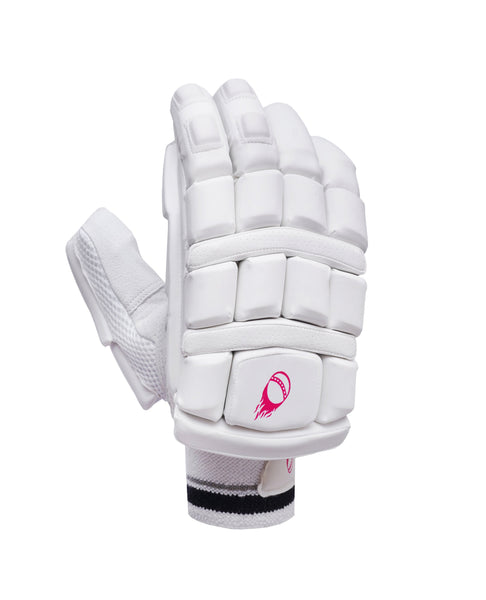 Premium White Batting Gloves£45.99£34.99 Sale
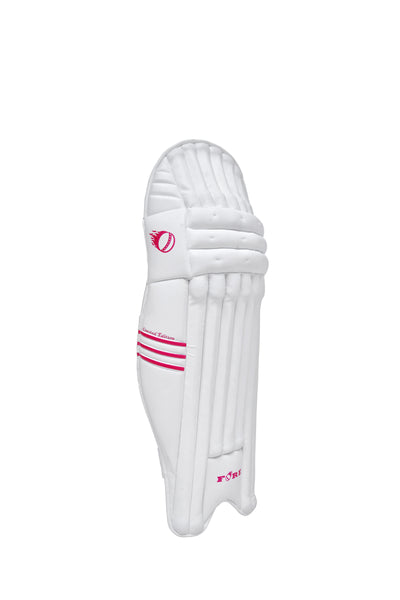 White Cricket Batting Pads£55.99£44.99 Sale
 Premium Cricket Helmet (Blue)£47.99£42.99 Sale
 White Thigh Pad - Large£42.99£34.99 Sale
 Premium Black Batting Gloves£45.99£34.99
 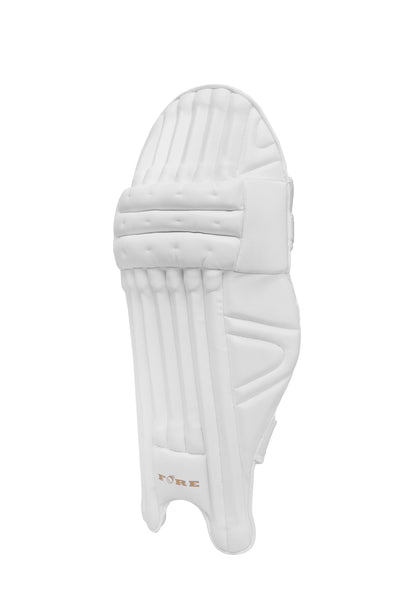 Premium Cricket Batting Pads£69.99
  Heavy Base Cricket Stumps£29.99 SalePremium White Batting Gloves£45.99£34.99 SaleWhite Cricket Batting Pads£55.99£44.99 SalePremium Cricket Helmet (Blue)£47.99£42.99 SaleWhite Thigh Pad - Large£42.99£34.99 SalePremium Black Batting Gloves£45.99£34.99 Premium Cricket Batting Pads£69.99 Heavy Base Cricket Stumps£29.99
Technically, yes. There's nothing stopping you from strapping on a pair of keeping pads and facing a bowler. They cover your shins, they've got knee rolls, and they strap on the same way batting pads do. For a lot of players, particularly wicket keepers who bat in the middle or lower order, it can feel like an obvious time-saver - one bag, one set of pads, less to carry.
That's usually why players consider it. It's convenience, not a considered equipment choice. A wicket keeper who's just finished an innings behind the stumps and gets a sudden batting collapse thrown at them might not have batting pads within reach. A junior player might only own one pair of pads because that's what was in the family kit bag. In casual midweek nets, someone might genuinely not think it matters.
But here's the problem: wicket keeping pads are designed around a completely different set of physical demands than batting pads. They're built for crouching, diving sideways, and reacting instantly to a ball coming off an inside edge or a stumping chance - not for absorbing a 6-ounce cricket ball travelling at 80mph+ into your front pad. Using them as a substitute occasionally at low intensity is a minor compromise. Using them regularly in competitive, hard-ball cricket is a genuine safety and performance issue, which we'll get into below.
If you're shopping for a pair right now, it's worth browsing Fore Sports' full range of wicket keeping pads to see how genuine keeper-specific design differs from a generic all-purpose pad.
Why Wicket Keeping Pads Are Different From Batting Pads
The core difference comes down to purpose. A wicket keeper needs to move fast, low, and often sideways - diving for a wide take, springing up for a stumping, or getting into position for a low catch. A batter needs to absorb direct, high-velocity impact on the front leg while staying balanced enough to play a shot. Those are almost opposite physical requirements, and the pad design reflects that.
Here's how they compare feature by feature:
| Feature | Wicket Keeping Pads | Batting Pads |
| Design purpose | Mobility, quick reactions, diving, low crouching | Maximum protection against direct ball impact |
| Length | Shorter - usually stops below the knee | Longer - extends well above the knee to cover the thigh |
| Weight | Lighter, streamlined for speed | Heavier, with denser protective padding |
| Protection area | Focused on shin and lower knee | Shin, full knee, and thigh guard area |
| Flexibility | High - designed to bend and flex for crouching/diving | Moderate - some flex, but prioritises impact absorption over agility |
| Knee protection | Smaller, mobility-focused knee roll | Larger, reinforced knee roll built to take direct hits |
| Thigh protection | Minimal to none | Often extends to protect the lower thigh |
| Movement | Optimised for lateral and crouching movement | Optimised for stable front-foot and back-foot shot play |
| Impact protection | Moderate - sufficient for occasional inside edges and stumping contact | High - engineered to absorb full-pace deliveries repeatedly |
The pattern is clear: keeping pads trade protection for mobility, and batting pads trade some mobility for protection. Neither is "better" in isolation - they're simply built for different jobs, the same way a goalkeeper's gloves aren't built for outfield play.
Keeping Pads vs Batting Pads: The Key Differences Explained
Why wicket keepers need mobility above all else
A wicket keeper might take 150+ deliveries in an innings, and on almost every one of them, they need to be in a low, ready crouch, able to explode sideways or upward in a fraction of a second. Bulky, heavily padded batting pads would slow that reaction time down significantly and make diving genuinely uncomfortable. That's why keeping pads are deliberately trimmed down - less bulk, more flex at the knee, and a shorter profile that doesn't restrict the squat position keepers hold for hours at a time.
Why batters need maximum front-leg protection
A batter facing a fast bowler has a fraction of a second to react to a ball that can arrive at 80–90mph, often short-pitched and rising toward the ribs or gloves, or full and straight at the pads. The front leg, in particular, takes repeated direct impact - from yorkers, from balls that beat the bat, and from deliberate short-pitched bowling aimed at testing technique. Batting pads are engineered specifically to absorb that kind of direct, high-force impact without transferring it straight to the bone, which is exactly why they're longer, heavier, and more heavily padded through the knee and thigh.
How each pad is engineered differently
It's not just padding density - it's the whole construction. Batting pads use larger knee rolls and bolsters positioned to protect the exact areas most likely to be struck when facing a bowler front-on. Keeping pads use smaller, more flexible knee sections designed to bend fully without restriction, because a keeper spends most of the innings with bent knees, not straight legs facing down the pitch. This is engineering built around biomechanics, not just marketing language on a product page.
Problems With Batting In Keeping Pads
If you do end up batting in keeping pads - even just for one innings - here's exactly what you're exposing yourself to:
1. Reduced protection against fast deliveries. Keeping pads simply don't have the padding density to absorb a full-pace delivery the way batting pads do. A ball that would be comfortably cushioned by a batting pad can sting significantly more through a keeping pad.
2. Less thigh and knee coverage. Because keeping pads are shorter and lack thigh extension, you're exposed higher up the leg - exactly where short-pitched bowling is often directed.
3. Increased injury risk. Bruising, and in worse cases more serious impact injuries, become more likely when the padding simply isn't built to handle direct hits at pace.
4. Discomfort during long innings. Keeping pads aren't shaped for the stance and shot-playing movements batting requires. Over a long innings, this can genuinely affect footwork and comfort.
5. Poor confidence while facing pace bowling. This one matters more than players often admit. If you know - even subconsciously - that your pads aren't giving you full protection, you hesitate. You get behind the ball late, you play more defensively than you need to, and you second-guess front-foot shots you'd normally play with confidence.
Real match example: Picture a club-level batter walking out at number 8 after keeping wicket, having lent their batting pads to a teammate earlier. The opposition brings on their quickest bowler, sending down 80mph+ deliveries. A ball that's short and rising catches the batter high on the thigh - an area a batting pad would have comfortably covered, but the keeping pad doesn't reach. That's not a hypothetical; it's the exact scenario purpose-built batting pads exist to prevent.
Net practice example: In indoor nets against a bowling machine cranked up to a good club pace, the difference is just as noticeable. Full-length batting pads let you commit fully to front-foot drives without hesitation. Shorter keeping pads make players instinctively pull out of shots because they can feel the exposure above the knee.
This is exactly why keeper-batters tend to carry two distinct pairs rather than one compromise pair - see our wicket keeping pads collection for options built specifically around the crouch-and-dive movement pattern, rather than a cut-down batting pad marketed as "dual purpose."
Can Keeping Pads Be Used For Batting In Emergency Situations?
This is where most articles online go too far in one direction or the other - either pretending it's always fine, or refusing to acknowledge that context matters. It does matter.
When it may be acceptable
- Casual, social cricket - a back-garden or beach game where there's no genuine pace involved.
- Light net practice - throw-downs or slow bowling machine settings where impact risk is minimal.
- Soft-ball cricket - formats using a tennis ball or incrediball, where the reduced hardness of the ball significantly lowers the risk that keeping pads' lighter padding poses.
- Genuine one-off emergencies - for example, a rain-delayed match where your kit bag hasn't arrived, and the alternative is batting with no pads at all.
In these lower-risk situations, the mobility trade-off of keeping pads isn't putting you at meaningful risk, because the impact forces involved are much lower than hard-ball, competitive cricket.
When you shouldn't do it
- Competitive league or club matches. The whole point of match cricket is that bowlers are trying to genuinely dismiss or intimidate you - that's exactly when full protection matters most.
- Hard-ball cricket at any level above casual play. Once a proper cricket ball and a bowler with real pace are involved, the protection gap becomes significant.
- Facing fast or short-pitched bowling. This is the single highest-risk scenario for under-protected legs, and it's precisely where keeping pads fall shortest.
As a simple rule of thumb: if the ball is hard and the bowling is genuinely quick, wear batting pads. If it's soft-ball, low-pace, or purely social, keeping pads as a stopgap are a reasonable compromise - but never a long-term substitute.
Why You Should Buy Separate Batting Pads
Beyond safety, there's a real performance case for owning proper batting pads rather than relying on keeping pads as a dual-purpose solution.
- Better protection - full-length coverage of shin, knee, and thigh means you can face genuine pace without hesitation.
- Better confidence - knowing you're properly protected changes how freely you play shots, particularly against the short ball. Confidence at the crease is as much a technical asset as it is a mental one.
- Correct fit - batting pads are shaped specifically for a batting stance, strapping in a way that supports front-foot and back-foot movement rather than a crouched keeping position.
- Better performance - you're not compromising your footwork or shot selection because you're subconsciously protecting an exposed thigh.
If you're a wicket keeper who also bats regularly - which describes a huge number of club and school cricketers - owning both a proper set of wicket keeping pads and a dedicated pair of batting pads isn't overkill. It's the same logic as a footballer owning boots suited to the pitch they're playing on, rather than using one pair for every surface.
Fore Sports' wicket keeping pads range covers junior through to senior/pro-level protection, so whichever end of that budget decision you're at, the keeping side of your kit bag is sorted with pads actually engineered for the role - not repurposed for a job they were never designed to do.
How Wicket Keeping Pads Should Actually Be Used
It's worth restating what keeping pads are actually built to excel at, because it reinforces why swapping them for batting duty undersells both roles.
Wicket keeping pads are designed around the demands of standing up to the stumps or crouching back for pace bowling: staying low for long periods, springing instantly for a stumping, diving flat to either side for a wide take, and getting in and out of position ball after ball. The lighter build, flexible knee construction, and shorter profile all exist specifically to support that movement pattern - not to compromise on protection for no reason, but because a keeper's risk profile (glancing contact, deflections, occasional full-blooded shots off an inside edge) is genuinely different from a batter's risk profile (repeated, direct, high-pace impact on the front pad).
If you're a keeper looking for pads that are actually built for the job - properly balancing protection with the mobility you need behind the stumps - it's worth browsing Fore Sports' wicket keeping pads collection, which is built around exactly this balance rather than treating keeping pads as a cut-down version of batting pads.
How To Choose The Right Cricket Pads
Whether you're buying batting pads, keeping pads, or both, a few practical factors should guide the decision:
- Player level. Junior and beginner players facing slower bowling can generally use slightly lighter pads; club and senior players facing genuine pace need pads built for higher-impact protection.
- Size and fit. Pads that are too long restrict movement; too short and you're exposed above the knee. Always measure against the size guide rather than guessing from age alone.
- Weight. Heavier pads generally mean more protection but less mobility - this trade-off matters more for keepers than batters.
- Protection level. Look at knee roll size, thigh guard coverage (for batting pads), and padding density, not just the price tag.
- Comfort and strapping. Poorly fitted straps cause pads to shift mid-match, which is both distracting and a genuine safety issue.
- Budget. It's reasonable to prioritise your primary role first - a wicket keeper who occasionally bats should invest in quality keeping pads first, then add batting pads as budget allows, rather than compromising on both with a single "do everything" pair.
For sizing specifics, it's worth checking a proper wicket keeping pad size guide before buying, especially for junior players who can grow out of pads within a season. If you're after a specific recommendation, our senior wicket keeping pads and junior wicket keeping pads are good starting points depending on playing level.
Conclusion
So, can you use wicket keeping pads for batting? Technically, yes - and for a casual net session or a soft-ball social game, it's a reasonable, low-risk compromise. But once you're facing a proper cricket ball and bowlers with real pace, the gap in thigh coverage, knee protection, and overall impact absorption becomes a genuine safety and performance issue, not just a technicality.
If you're a keeper who bats regularly, the smartest long-term move is owning both - pads engineered for the crouch, dive, and reaction speed behind the stumps, and pads engineered to absorb a fast delivery in front of them. Explore Fore Sports' wicket keeping pads built specifically for that first job, and make sure your batting kit is doing the second job properly too.