It's the third over of a long afternoon. A batter clips one off the hip, the ball deflects low off the inside edge and cannons straight into the bottom of your pad. At club pace, that is not a tap. It is the kind of impact that sends a jolt straight through the ankle - and if your pads do not have proper instep coverage, you will feel it for a week.
Wicket keepers spend entire innings in a crouch. Every delivery, your ankles sit right at pad level. You dive, you sweep across the crease, you rise and drop repeatedly. The ankle is not an afterthought in keeping kit - it is one of the most consistently exposed joints on the pitch. Yet most guides to buying wicket keeping pads barely mention it.
This article fixes that. It covers what ankle protection in keeping pads actually means, how to evaluate it, which pads do it well, and where to buy in the UK. Whether you are a club keeper or buying for a junior, you will leave this page knowing exactly what to order and why.
Why Wicket Keepers Need Better Ankle Protection Than Batters
Batters face one direction. When a ball hits at ankle height, it is usually a full delivery that has gone past the bat. The risk is real but specific. Wicket keepers are in a fundamentally different situation.
In a full crouch, the top of the foot and the front of the ankle face the bowler for every delivery. The pad sits lower on the leg than a batting pad would, which is necessary for movement but means the ankle is constantly in the firing line. Add lateral dives for wide takes, the sweeping motion of collecting a delivery down the leg side, and the close-range deflections you take standing up to spin - the ankle is working hard and exposed throughout.
Standing up to the stumps specifically puts the inside ankle at risk from sweeps and reverse sweeps that catch the bottom of the bat and deflect straight down. At 60–70mph club pace, a deflection off the bottom of a bat at that angle has significant force. Without reinforced instep coverage, it goes directly onto bone.
This is not a hypothetical risk. Ankle bruising, bone bruising, and in more serious cases, fracture are documented injuries for keepers who use underpowered pads. The solution is not complicated - it is choosing pads with proper ankle and instep protection, worn correctly.
What Is Instep Protection in Wicket Keeping Pads?
Before you can evaluate ankle protection, you need to understand what the instep actually is on a keeping pad - because product descriptions use the term freely without explaining it.
The Instep: What It Is and What It Does
The instep is the lower section of the pad that wraps around the top of the foot and covers the front of the ankle joint. Think of it as the pad equivalent of the tongue on a cricket boot - it bridges the shin protection above and the foot below.
A proper instep does two things: it absorbs direct impacts to the ankle area, and it holds the base of the pad in position so the rest of the pad stays aligned over your shin. A poor or absent instep lets the pad migrate upward, leaving the ankle exposed during longer sessions or when you are moving quickly.
Budget keeping pads often skip meaningful instep protection to cut weight and cost. The instep is also the part that takes the most scuffing wear - keepers drag the base of the pad across the popping crease constantly, and a well-constructed instep lasts significantly longer as a result.
Types of Instep Construction
Leather instep: Found on premium and match-grade pads. Leather is hardwearing, handles scuffing well, and provides solid impact absorption. The best option for regular league and club keepers.
Padded mesh instep: Breathable and flexible. Common on mid-range pads. Good ankle impact protection with better airflow than leather, though it tends to wear faster on abrasive surfaces.
Foam or PU instep: Standard on entry and mid-range pads. Adequate protection at club level, but check foam density - a thin layer of low-density foam at the ankle compresses quickly under repeat impacts and offers diminishing returns within a season.
When reading product descriptions, look specifically for the words "instep," "instep protection," "leather instep," "padded instep," or "instep piping." If a product description does not mention the instep at all, that is a signal worth investigating before buying.
Wicket Keeping Pads vs Batting Pads - Key Differences for Ankle Coverage
A significant number of club keepers, particularly those who keep occasionally or play in lower divisions, buy batting pads or use old batting pads behind the stumps. This is worth addressing directly because the ankle protection implications are significant.
Batting pads are longer - they cover more of the thigh - but this extra length works against a keeper in the crouch position, where a long pad digs into the back of the thigh. More relevantly for this guide, batting pads are not engineered for the ankle exposure specific to the keeping stance. The instep on a batting pad is present, but it is designed to stay put while a batter stands and runs - not to flex through the range of movement a keeper makes.
Keeping pads are built shorter to allow a full crouch, and the instep and lower pad section are designed with the crouching, diving, and lateral sweeping motions of a keeper in mind. The wings on keeping pads are wider to support lateral coverage, and the strap positions differ - top strap sits just below the back of the knee, lower strap around the calf, with the instep securing the base.
If you are keeping regularly at club level and wearing batting pads, switching to proper keeping pads will make a noticeable difference to both comfort and ankle protection within one session.
What to Look for When Buying Wicket Keeping Pads
Instep Coverage
Check product listings for specific instep detail. A pad described as "lightweight with reinforced instep" tells you more than one listed simply as "wicket keeping pad." If you cannot find instep detail in the product description, check the spec sheet or contact the retailer - any specialist cricket shop should be able to confirm this.
Ankle Strap Design
A two-strap system is standard on mid to premium pads - one strap around the calf, one at the ankle. Both should be adjustable and feature Velcro/hook-and-loop fastenings for fast adjustment between overs. The ankle strap is specifically what keeps the base of the pad locked against the instep: if this strap is absent or poorly made, the pad will ride up.
Wider straps (50mm) at the ankle distribute tension better than narrow ones and reduce the chance of the pad twisting during lateral movement.
Foam Type and Density at the Ankle Zone
The ankle zone should have high-density foam or a specialist material like EVA or plastozote. Single-layer low-density foam at the base of the pad is not adequate for regular club cricket. Multi-layer or high-density construction is the benchmark worth paying for if you keep weekly.
Pad Weight
Keeping pads should ideally sit under 0.7kg per pad. This is not just a comfort preference - heavier pads change the way you move in the crouch and put additional load on the ankle joint itself. Over a long day behind the stumps, this matters.
Standing Up vs Standing Back
If you primarily keep up to the stumps to slow bowling, ankle strap security and instep fit should be your top priority - lateral movement is more frequent and the inside ankle is more exposed. Standing back to pace involves less ankle rotation but more diving, so cushioning at the base of the pad becomes more important.
Wicket Keeping Pads with Ankle Protection - Comparison (2026)
|
Pad |
Instep Type |
Ankle Strap |
Foam Grade |
Best For |
Approx. UK Price |
|
Reinforced instep* |
Adjustable |
Match-spec foam |
Club keepers, red-ball cricket |
£32.99 |
|
|
Reinforced instep* |
Adjustable |
Match-spec foam |
Club keepers, T20 & coloured kit |
£32.99 |
|
|
Chase R11 |
Padded mesh instep |
2 padded ankle straps |
Plastozote moulded |
All levels, BS 6183 certified |
£45–£55 |
|
Kookaburra 1.0 T/20 |
PVC instep with piping |
50mm calf & ankle, hook & loop |
Micro-weight HDF |
Premium club / league |
£60–£80 |
|
Gray-Nicolls Prestige |
Vapour foam + traditional fill |
Adjustable |
HD foam + cane |
League / county standard |
£60–£75 |
|
Gunn & Moore 606 |
Foam instep |
Velcro calf & ankle |
HD foam |
Club standard, good all-rounder |
£45–£55 |
|
FORTRESS (Net World Sports) |
High-arch instep |
2 × adjustable, 2-inch |
Standard EVA |
Budget / beginner / junior |
£20–£28 |
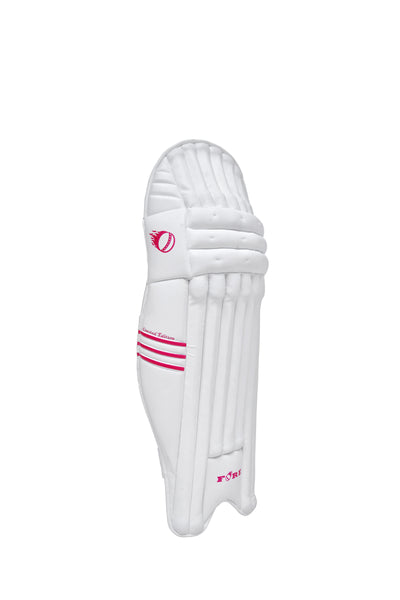
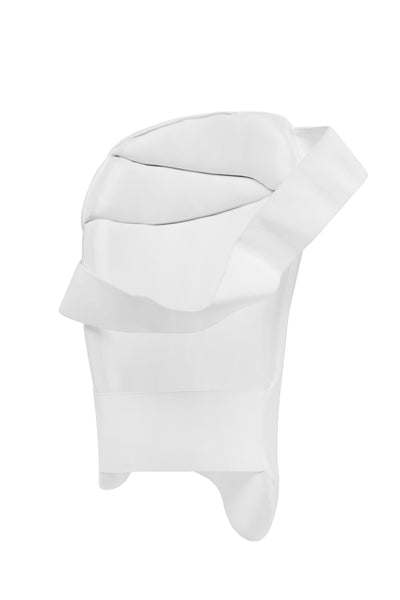
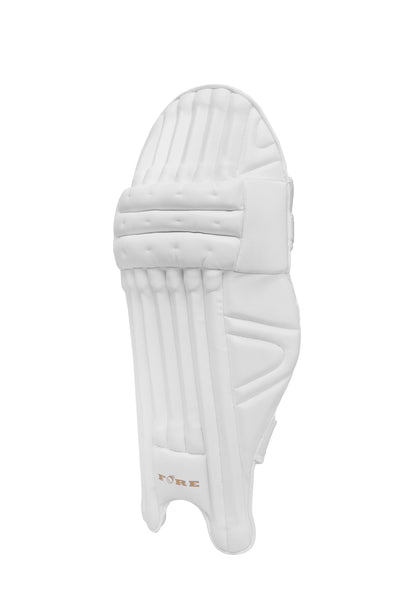
Fore Sports Cricket Keeping Pads (White & Black) - Built specifically for club and league keepers at a price that does not force a compromise. The short-profile crouch fit and reinforced instep make these a practical choice for players who keep weekly, with the Black version suitable for T20 and coloured-kit formats. Browse both options here →
Chase R11 - One of the few pads to carry explicit British Standard certification (BS 6183-1:2000). The two padded ankle straps and plastozote moulded construction give it the best technical ankle specification at this price point. A strong pick for keepers who stand up to spin regularly.
Kookaburra 1.0 T/20 - The pad of choice for players who want elite-brand equipment at club level. The PVC instep with piping is hardwearing, and the 50mm ankle strap system locks in well through active sessions. On the pricier side but built to last multiple seasons.
Gray-Nicolls Prestige - Uses vapour foam specifically in the instep zone alongside a traditional fill to guard against ankle impacts. The 2-inch high arch allows a comfortable fit over cricket shoes without constant readjustment. Premium pick for experienced keepers.
Gunn & Moore 606 - The most popular club-standard keeping pad in England for good reason. Solid high-density foam throughout, a reliable Velcro strap system, and a track record at every level from village to county second XI.
FORTRESS (Net World Sports) - The most accessible entry-level option for UK buyers, available with next-day delivery. The high-arch instep and dual adjustable straps outperform what you would expect at this price, making it a practical starting point for juniors or occasional keepers.
How to Size Wicket Keeping Pads Correctly
One competitor in the UK market instructs buyers to measure from the ankle to the middle of the thigh for wicket keeping pads. That is the measurement for batting pads, not keeping pads, and it is worth correcting clearly.
The correct measurement for wicket keeping pads is from the middle of the kneecap to the bottom of the ankle. Keeping pads are shorter by design to allow a full crouch. A pad sized to batting pad length will dig into the back of the thigh every time you go down, restrict movement, and place more pressure on the ankle by forcing the pad upward.
Step-by-step:
- Sit with the leg bent at roughly 90 degrees, as close to a keeping crouch as you can manage without support
- Measure from the centre of the kneecap to the bottom of the ankle bone
- Compare this against the manufacturer's size chart for keeping pads specifically - not batting pads
- If you are between sizes, go smaller for keeping pads; a slightly short pad stays in place better in a crouch than one that is slightly long
Junior sizing note: Most brands define junior keeping pads as suitable for a measurement of approximately 28–33cm, with adult sizing from 34cm upward. These thresholds vary by brand, so always check the specific size chart. Sizing down for juniors is particularly important because an ill-fitting instep section provides no meaningful ankle protection regardless of the pad's quality.
White or Black Keeping Pads - Does It Affect Ankle Protection?
No. The ankle protection, instep construction, foam type, and strap system are identical across white and black variants of the same pad. The difference is cosmetic only.
That said, the colour choice is governed by the format you play. In red-ball cricket - any club or league fixture played in whites - white keeping pads are the standard and, in most leagues, required. For T20 and coloured-kit formats, black or coloured pads are permitted and increasingly preferred because they remain cleaner-looking through a match.
If you play both formats, or if your club competes in both a Saturday league (whites) and a Sunday T20 competition, having one of each is practical. The Fore Sports Cricket Keeping Pad in White and Black both carry the same specification at £32.99, so building a two-format kit bag is straightforward.
Can Junior Wicket Keepers Use Adult Pads?
Not ideally, and the ankle protection argument is part of the reason why.
Adult keeping pads are cut for adult leg proportions. On a junior keeper, an adult pad will sit too high, pushing the instep off the ankle entirely and rotating the pad body away from the correct protection position over the shin. This is not just a comfort issue - it leaves the ankle exposed regardless of how good the instep construction is.
Junior-specific keeping pads are proportionally shorter and designed so that the instep section sits correctly over a smaller foot and ankle. The foam grades are generally appropriate for the pace levels juniors face.
The practical threshold for switching from junior to adult sizing is a kneecap-to-ankle measurement of around 34cm, but check the specific brand's size chart. When in doubt, measure first - an accurate measurement takes 30 seconds and eliminates the guesswork.
Where to Buy Wicket Keeping Pads Online in the UK
If you searched "keeping pads near me," the honest answer for most UK towns is that a specialist cricket shop within travelling distance is unlikely. The UK has excellent specialist cricket retailers operating online with fast domestic delivery - and for a specialist item like keeping pads with specific ankle protection requirements, online is genuinely the better option. You get accurate spec information, current-season stock, and the ability to compare across brands in one place.
Fore Sports stocks wicket keeping pads in both White and Black, for junior and adult sizes, with free UK delivery on orders over £100. As a cricket-dedicated retailer - not a generalist sports warehouse - the range is curated rather than cluttered.
To complete a full keeping kit alongside your pads:
Frequently Asked Questions
What is the difference between wicket keeping pads and batting pads?
Keeping pads are shorter to allow a full crouch without restriction at the back of the thigh. They have wider wings for lateral coverage, a specifically engineered instep for ankle protection, and a different strap configuration (top strap below the knee, lower strap around the calf). Using batting pads for keeping is a common mistake that compromises both movement and ankle protection.
Do all wicket keeping pads protect the ankle?
Not all of them, no. Budget and entry-level pads often have minimal or no dedicated instep coverage. Mid-range and premium pads include reinforced instep sections in leather, padded mesh, or high-density foam. Before buying, check the product description specifically for instep and ankle strap details.
What is the correct way to measure for wicket keeping pads?
Measure from the centre of your kneecap to the bottom of your ankle bone. This is different from batting pads, which are measured from ankle to mid-thigh. Using the wrong measurement results in a pad that is too long for the keeping crouch.
How do I stop my keeping pads from sliding down during a match?
The lower ankle strap is usually the cause when pads slide - if it is loose, the instep loses contact with the foot and the pad migrates upward. Tighten the ankle strap until the base of the pad sits snugly over the top of your boot. If sliding persists, the pad may be sized too large; try a size down.
How long should a pair of wicket keeping pads last?
A mid-range to premium pair, properly cared for, should comfortably last three to five seasons of weekly club cricket. The instep section typically shows the earliest wear because of scuffing against the popping crease. Wipe pads down with a damp cloth after use and store them flat or upright - not compressed under other equipment.