
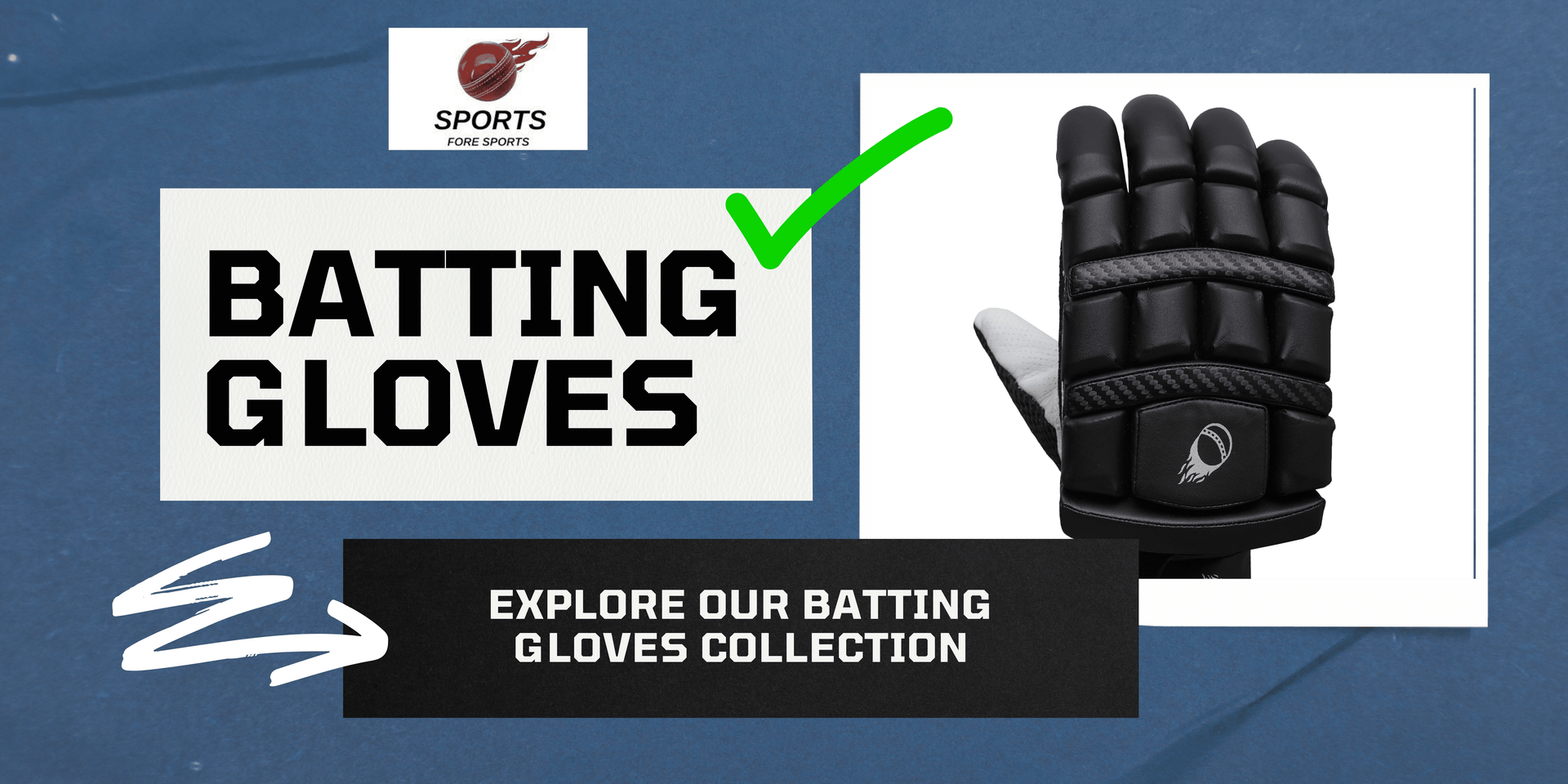


Batting gloves take more direct impact than any piece of cricket kit other than the bat - high-density foam across the back of the hand and fingers stops a short ball from breaking knuckles, and the leather palm grips the handle through the shot. Our cricket batting gloves collection covers every level of play, from soft-palmed junior gloves for age-group cricketers who haven't yet faced a hard ball, to pro-grade adult gloves with individually sausage-segmented fingers, reinforced palm leather, and ventilated back panels. Every pair is sized for comfortable hand movement without loose fingers, because poor-fitting gloves cause blisters, mis-hits and injuries.
Explore Our Batting Gloves Collection
Enhance your grip and protect your hands with our premium batting gloves. Designed for comfort, durability, and performance, our collection offers a variety of options to suit every cricketer’s needs. From junior players to professionals, find the perfect pair to elevate your game and keep you comfortable at the crease.
Why Choose Our Batting Gloves?
- Superior Grip: Enhanced grip technology ensures a secure hold on the bat in all conditions.
- Comfortable Fit: Designed for flexibility and comfort, allowing for unrestricted movement.
- Durable Build: Made from high-quality materials for long-lasting performance.
- Style Options: Choose from sleek designs and vibrant colors to match your preferences.
- Unmatched protection: Explore gloves with padded fingers and palms to shield your hands from impact.
Choosing the Right Gloves:
Selecting the perfect pair of batting gloves is crucial for your game. Consider factors such as:
- Size: Refer to our size guide for a perfect fit that ensures comfort and cricket protection.
- Material: Look for breathable materials that provide both comfort and durability.
- Padding: Opt for gloves with sufficient padding to protect against impacts.
- Style: Choose a design that matches your personal preference and playing style.
Shop Now
Explore our range of batting gloves today to find the ideal pair that meets your needs on the field. With secure checkout and fast shipping options, getting geared up for your next match has never been easier at ForeSports.
Shop with us and experience the winning difference!
How to choose cricket batting gloves
Sausage finger vs split finger is about feel, not fashion. Sausage-finger gloves use one long foam roll per finger, giving the strongest impact protection and the traditional look - these are the standard at professional level. Split-finger designs segment each finger into multiple cells, which gives more grip flexibility on the handle at a slight cost in raw impact protection. Most club cricketers are well served by either; choose what feels natural when you grip the bat.
Palm material changes durability more than grip. Premium gloves use sheep-leather or pittards leather palms, which grip well when dry and last multiple seasons. Entry-level gloves use synthetic PU palms - cheaper and easier to clean, but they wear through faster and get slippery once they pick up sweat. If you bat regularly, the leather palm pays for itself.
Sizing: tight enough that nothing slides, loose enough that circulation is normal. Measure from the base of the palm to the tip of your longest finger; that length matched against our size chart gives the right fit. Fingers should reach the end of the glove with 2-3mm of slack; gloves that leave half an inch of empty finger space will slip on the handle and cause blisters.
Juniors need junior-specific gloves. A scaled-down adult glove is not the same as a glove designed for a 10-year-old hand - the finger segmentation and foam density are calibrated differently. Junior gloves also have lower impact requirements because age-group cricket uses the 4.75oz junior ball, which means lighter and more flexible construction is safe and appropriate.
Cricket batting glove sizing
|
Size |
Hand length |
Typical age |
Fit |
|
Boys' Small |
16-17 cm |
7-9 years |
Junior hand |
|
Boys' |
17-18 cm |
9-11 years |
Junior hand |
|
Youth |
18-19 cm |
11-13 years |
Youth hand |
|
Men's Small |
19-20 cm |
13-15 years / small adult |
Small adult |
|
Men's |
20-21 cm |
Adult |
Standard adult |
|
Men's Large |
21-22 cm |
Adult |
Large adult |


